When entering a new market, many businesses focus on setup and future operations. But what happens if the company is not yet active?
A common assumption is that no activity means no responsibility. In reality, this is not always the case.
In many jurisdictions, companies are still expected to meet certain compliance obligations, even when there is no active business.
Why This Misconception Happens
This misunderstanding often comes from experience in other markets.
Businesses may assume that:
- Compliance only applies when operations begin
- Administrative requirements are minimal during inactive periods
- Local regulations follow familiar structures
However, regulatory frameworks vary significantly across countries. In emerging markets, requirements are often more structured than they initially appear.
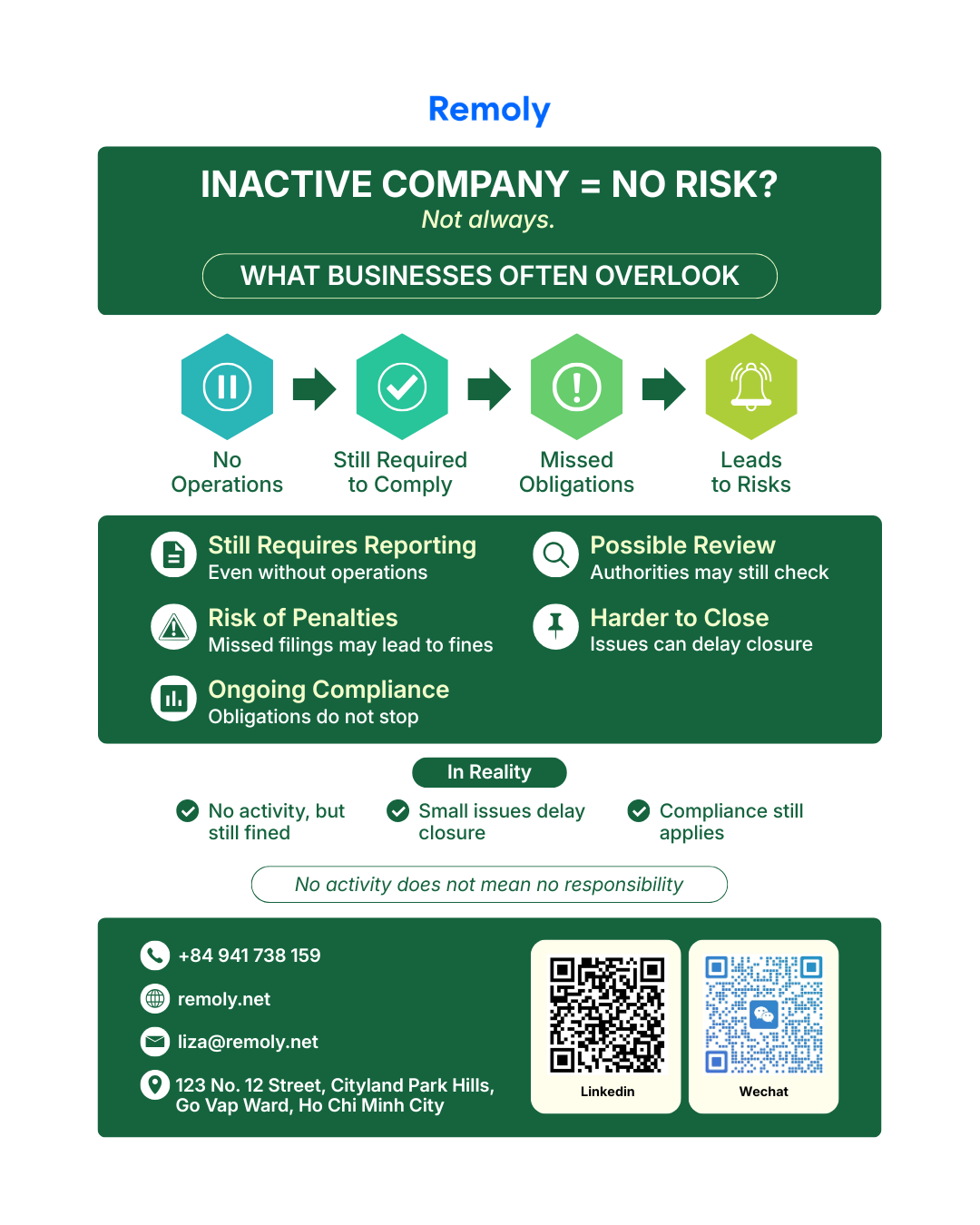
The visual above outlines how inactivity can still lead to compliance risks and operational challenges.
What Businesses Often Experience
In practice, inactive companies may still encounter operational challenges over time.
These may include:
- Ongoing administrative processes that continue in the background
- Minor inconsistencies that affect future filings or changes
- Delays when attempting to update or close the company
Such issues are not always visible at the beginning, but can gradually impact business flexibility.
Why This Matters in Emerging Markets
This is particularly relevant in fast-growing regions where regulatory systems are evolving.
Across Southeast Asia, including Vietnam, compliance expectations are becoming more structured and closely monitored. Authorities increasingly expect companies to maintain proper records and follow procedures, regardless of whether the business is active.
Understanding these expectations early helps reduce unnecessary risks.
Practical Considerations for Businesses
To better manage inactive entities, companies can:
- Stay informed about ongoing compliance obligations
- Maintain accurate and consistent documentation
- Periodically review company status
- Seek local guidance when navigating regulatory requirements
These steps can help prevent avoidable complications later.
An inactive company is not always a risk-free position.
In many cases, it simply means that the risks are less visible—but still present.

Easy to start,
intuitive to use