
Entering a new market often brings strong growth opportunities. However, many companies tend to focus more on expansion and overlook ongoing compliance requirements.
In fast-growing economies, regulatory systems can be detailed and different from what businesses are used to. As a result, even experienced companies may face unexpected challenges.
Understanding common compliance gaps early can help reduce risks and avoid unnecessary delays.
Why Compliance Issues Happen
Most compliance problems do not come from major violations. They usually start with small misunderstandings.
This often happens because:
- Regulatory systems differ from one country to another
- Local requirements are not fully understood
- Businesses assume processes are simpler than they are
In markets across Southeast Asia, including Vietnam, these factors can quickly affect operations if not managed properly.
What Businesses Often Overlook
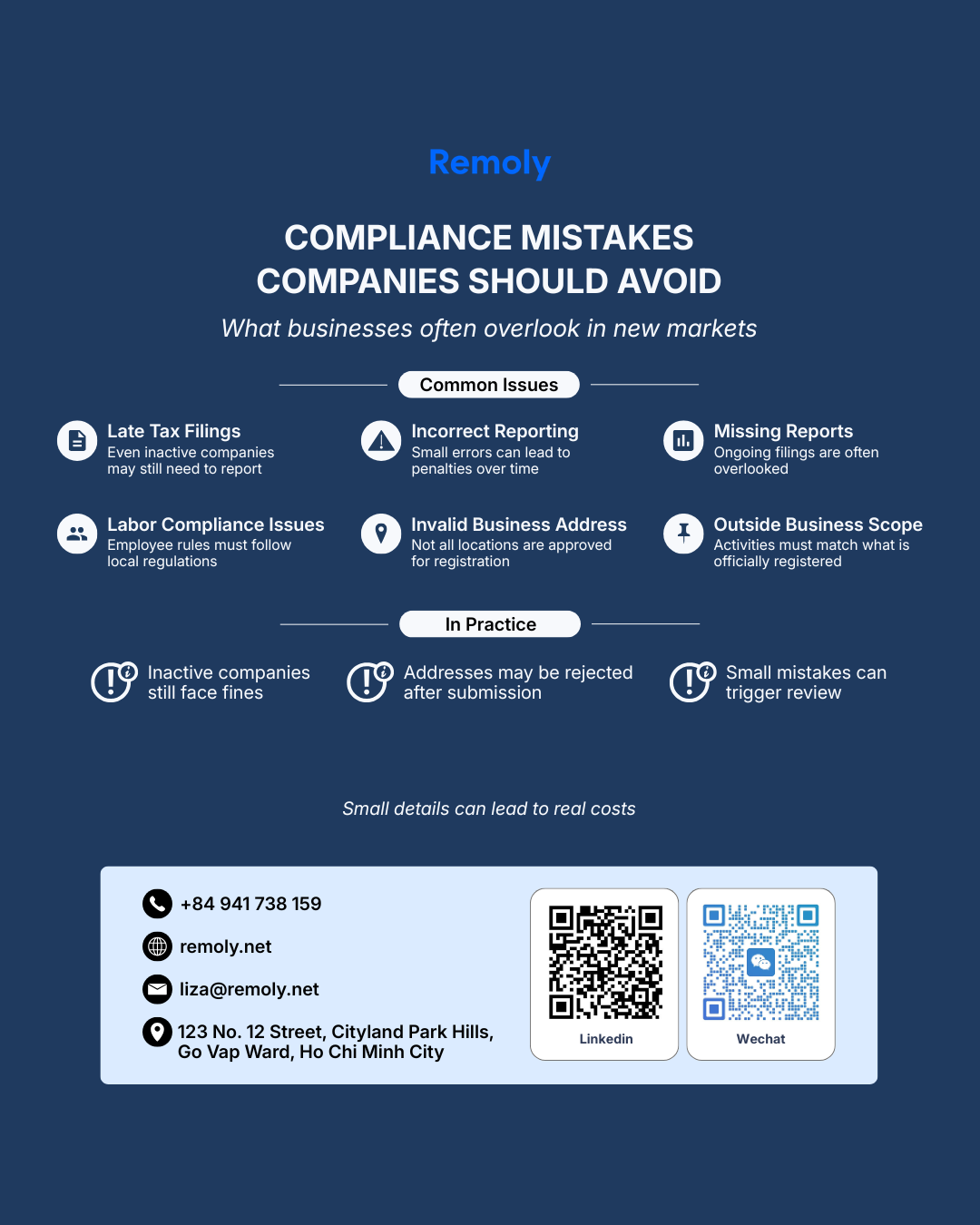
Beyond the common issues shown above, companies often miss the fact that compliance is not a one-time process.
In practice:
- A company may remain inactive but still be required to submit reports
- Administrative details can affect approval outcomes
- Minor inconsistencies may attract regulatory attention
These situations are not unusual, but they can slow down operations if not handled early.
Why This Matters in New Markets
In developing markets, regulations are becoming more structured and closely monitored.
Businesses are expected to:
- Maintain accurate and timely reporting
- Ensure activities align with registered scope
- Stay updated with local regulatory changes
Markets like Vietnam reflect this shift, where compliance is increasingly enforced.
Practical Tips to Stay Compliant
To reduce risks, companies can take simple steps:
- Understand requirements before starting operations
- Work with reliable local support
- Maintain regular reporting, even if inactive
- Keep documentation clear and consistent
Most compliance risks come from small details that are often overlooked.
Addressing them early allows businesses to operate more smoothly and focus on long-term growth.

Easy to start,
intuitive to use