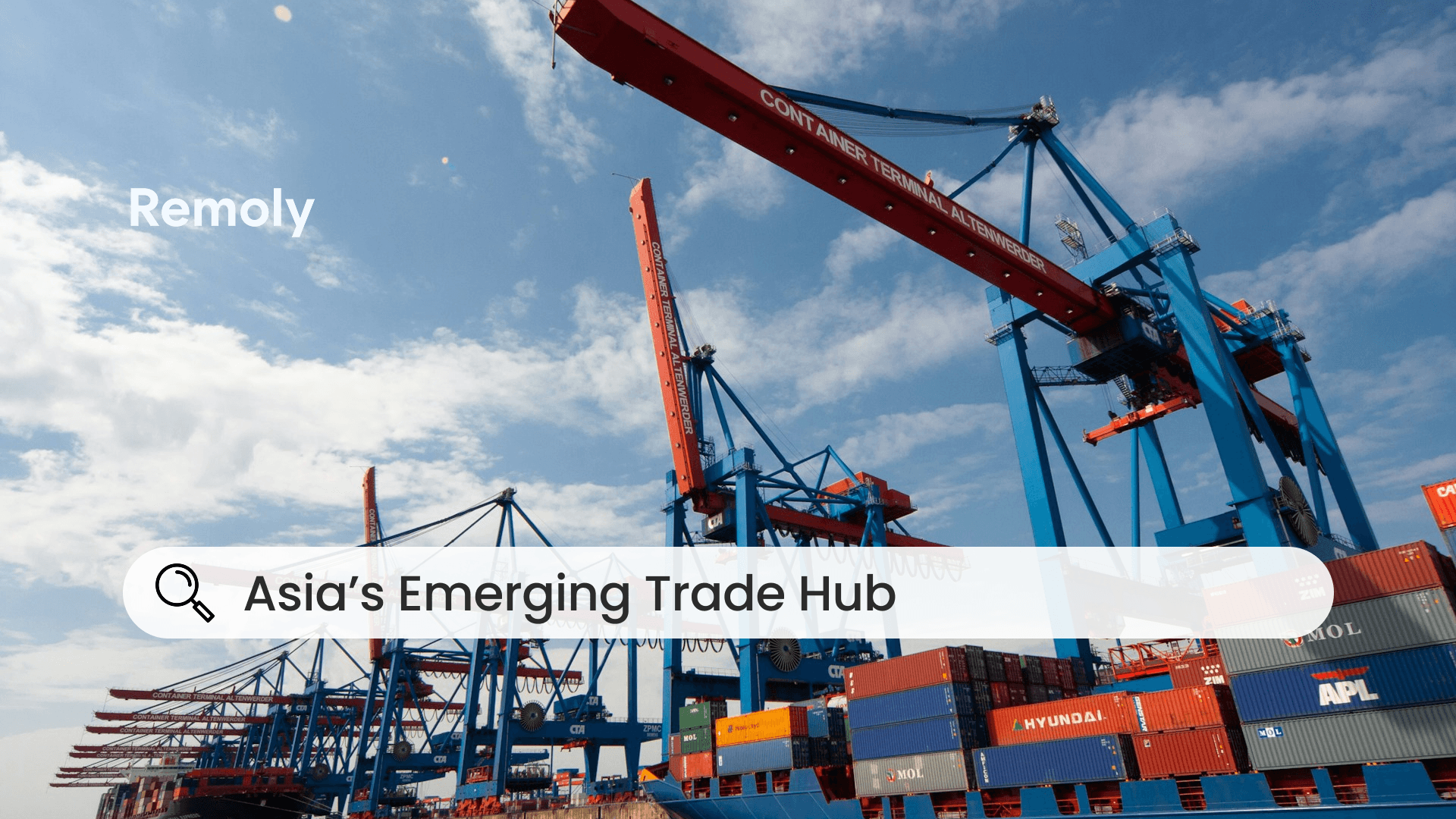
As supply chains continue to evolve, many companies are rethinking where to base their trading operations in Asia. The decision is rarely about one single factor. It usually comes down to a mix of cost, market access, and operational flexibility.
In this context, Vietnam is increasingly being considered as part of a broader regional strategy. Not necessarily as a replacement for existing operations, but as an additional base that supports trade activities.
What Companies Actually Look For
When evaluating a location for a trading entity, companies tend to focus on practical questions:
- Can goods move in and out efficiently?
- Are costs manageable over time?
- Is it possible to work smoothly with local partners?
- Does the location support regional distribution?
These factors shape day-to-day operations more than headline advantages.
Where Vietnam Fits In
In recent years, some companies from China and other markets have started to include Vietnam in their regional planning.
This does not always mean relocation. A more common approach is:
- Maintaining existing operations elsewhere
- Setting up a trading or support entity in Vietnam
- Using it to complement regional activities
This kind of structure allows companies to stay flexible while testing a new market.
Practical Reasons Behind the Interest
1. Access to Regional Trade
Vietnam is part of Association of Southeast Asian Nations, which gives businesses access to a wider regional market.
In practice, this can support:
- Distribution within Southeast Asia
- Closer proximity to buyers and partners
- More options for routing goods
2. Trade Agreement Coverage
Vietnam has entered several major agreements, including:
- Comprehensive and Progressive Agreement for Trans-Pacific Partnership (CPTPP)
- EU–Vietnam Free Trade Agreement (EVFTA)
For trading companies, this may provide:
- More favorable tariff conditions in certain markets
- Additional flexibility in structuring trade flows
The actual benefit depends on the product and how the supply chain is set up.
3. Cost Considerations
Vietnam is often viewed as cost-competitive compared to some more established markets in Asia.
This can include:
- Labor costs
- Office or warehouse rental
- General operating expenses
However, costs vary by location and business model, so this should be assessed case by case.
4. Role in Supply Chains
Vietnam has become part of many regional supply chains, particularly in manufacturing.
For example, companies such as Samsung have established large production bases in the country. This has contributed to a broader ecosystem of suppliers and service providers.
For trading companies, this environment can make sourcing and coordination more practical.
5. Establishing a Local Presence
Setting up a company in Vietnam allows businesses to operate more directly.
This typically enables:
- Signing contracts under a local entity
- Opening corporate bank accounts
- Working with local partners more efficiently
Without a local structure, these processes can be more limited or indirect.
How It Works in Practice
A typical setup does not need to be complex. In many cases, companies:
- Register a trading entity in Vietnam
- Use it to handle import and export transactions
- Coordinate logistics and payments through that entity
This can simplify certain aspects of cross-border trade, depending on the business model.
A Balanced View
Vietnam is not a one-size-fits-all solution. It tends to be more suitable for:
- Trading and distribution activities
- Sourcing and supply chain coordination
- Businesses looking for a regional support base
At the same time, companies should be prepared for:
- Administrative procedures and licensing requirements
- The need for local guidance
- Time needed for setup and compliance
Approaching the market with a clear plan is important.
Conclusion
Vietnam’s role in regional trade has grown for practical reasons rather than hype. For some companies, it offers a useful addition to their existing structure, especially when flexibility and regional access are priorities.
The key is not whether Vietnam is the right choice in general, but whether it fits a company’s specific trade strategy.

Easy to start,
intuitive to use